 On a Thursday morning last July, six out-of-state anti-abortion extremists invaded Delaware County Women’s Center in Upland, Pennsylvania, under the guise of fake appointments. Two of the clinic invaders had just been pardoned by President Trump for previous violations of the federal Freedom of Access to Clinic Entrances (FACE) Act.
They refused to leave and attempted to interfere with services, throwing an unknown liquid and a white powder throughout the facility. The clinic staff held their ground, working to reassure patients and do their jobs.
A new report from the National Abortion Federation confirms what providers across Pennsylvania have been telling us: the federal government has stopped protecting patients and providers, and extremists know it. A Pennsylvania state FACE Act (HB 670) would make clear, once and for all, that blockading, invading, or obstructing someone from entering a clinic is a crime here.
👉 Take action: Tell your PA House representative to co-sponsor the state FACE Act
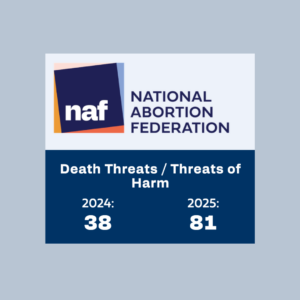
NAF’s 2025 Violence & Disruption Report documents a steep escalation in attacks on abortion providers nationwide. Since 2024, death threats against providers jumped by 113%, and stalking more than doubled. Clinic blockades and invasions rose dramatically, and online harassment campaigns have flooded clinics with tens of thousands of threatening calls, emails, and messages.
Thanks to the clinic staff’s extraordinary response, the Delaware County Women’s Center invaders were eventually arrested and charged with defiant trespass (they pleaded no contest). The sad reality is that this wasn’t an isolated incident. The numbers make it clear that when the federal government stopped enforcing the FACE Act, extremists got bolder, and providers and patients have been paying the price.
Women’s Law Project has spent decades representing abortion providers and fighting in Pennsylvania courts to protect access to reproductive health care. When the federal government abandons its duty to protect patients and healthcare providers, we need our state laws to fill the gap.